

Stroke and Mental Health: Why Recovery Is Never Just Physical


By coffee number ten, I'd finally managed to pour the milk in the right cup.
My six-year-old helped. She didn't make a big deal of it.
A week later, I thought I'd cracked it — only to drop the whole cup when I lifted it with my stroke hand. And I just stood there in my kitchen, surrounded by the mess, thinking: Sisyphus. Pushing the boulder up the mountain. Watching it roll back down. Getting up tomorrow and doing it all again.
That's the thing nobody tells you when you sign the discharge paperwork and walk back through your own front door. The visible recovery — the speech therapy, the physio, the relearning how to do things — that part, people understand. They can see it. They can cheer you on.
The mental health part is underneath all of that. And it's enormous.

Something huge just happened. Your life, as you knew it, has been turned upside down. Some people appear to bounce back quickly — to the eyes of outsiders. It's never that simple.
The losses are harder to explain. Your friends are going to a loud dinner at the new restaurant in town. You know you'll get a migraine if you go. You get the invite anyway, because people care. But you also know your limits now, your triggers, in a way you never had to before. You sit it out.
And that's depressing. Let's face it. You want to be back in the game, not watching from the sidelines.
I've had four therapists in four years. All with different specialisms. One focused on my confidence — CBT — which had quietly crumbled after the stroke in ways I hadn't even noticed until it was pointed out. Another used compassion-focused therapy, specifically to help me stop identifying with Sisyphus.
What I've learned is that one approach isn't enough, and one therapist isn't forever. It's okay to be honest when something has stopped working. I've tried CBT, brain spotting, hypnosis, breathwork for the vagus nerve — and each of them has given me something, even the ones I didn't expect to.
My dad was a psychiatrist. So I came into this with a healthy respect for the process. But even I needed reminding that it is a process — and a long one. There's no quick fix. Just smaller bits, worked through with the right people, at the right time.
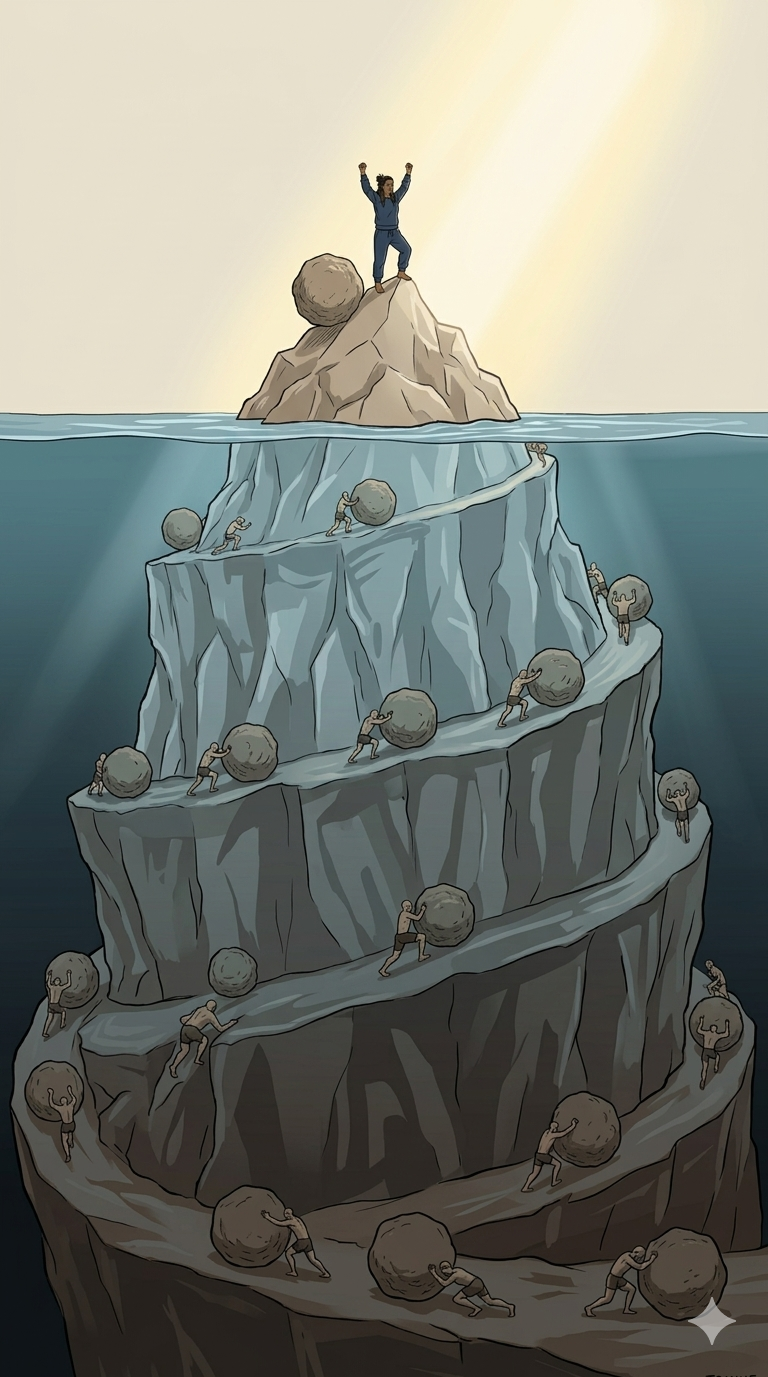
Stroke recovery doesn't end at discharge. The boulder is real. You're allowed to say that.
You just also need someone in your corner while you push it.


Comments